1. What is baby bottle tooth decay?
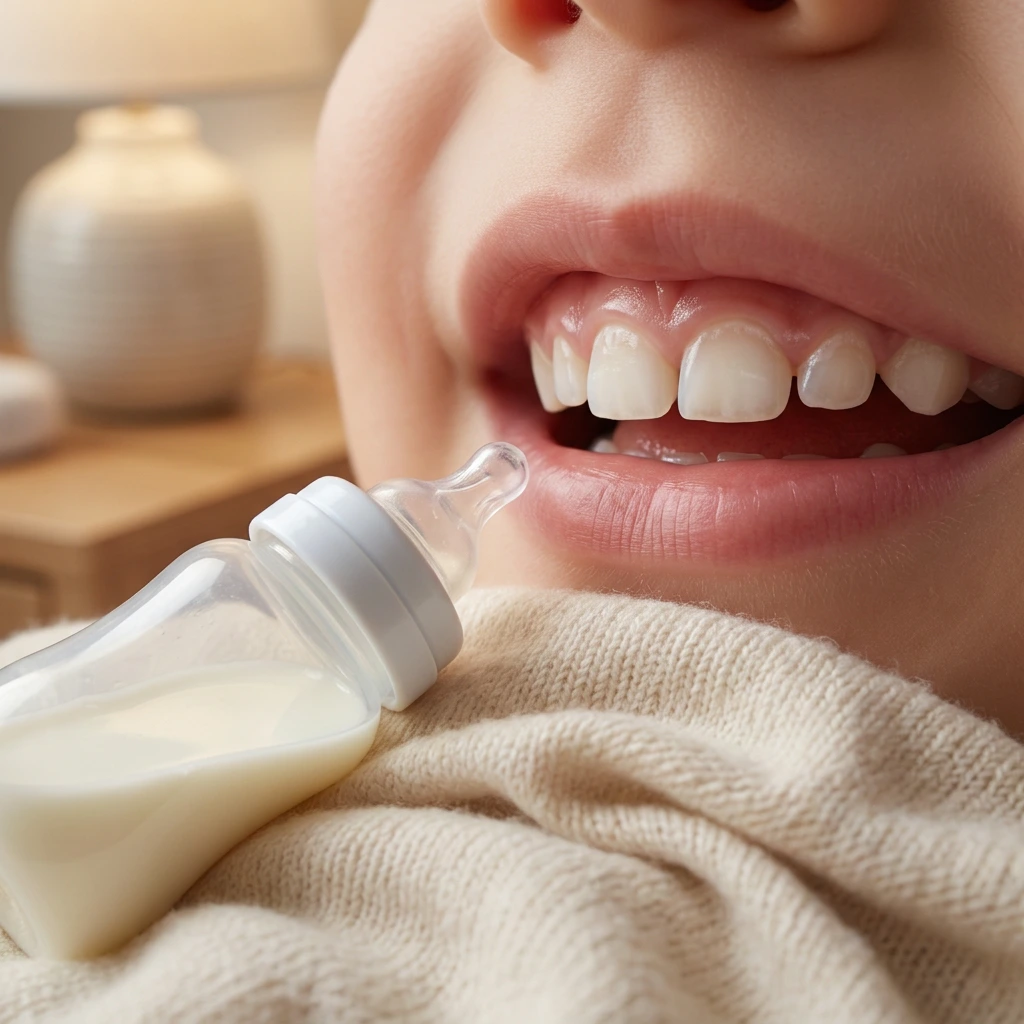
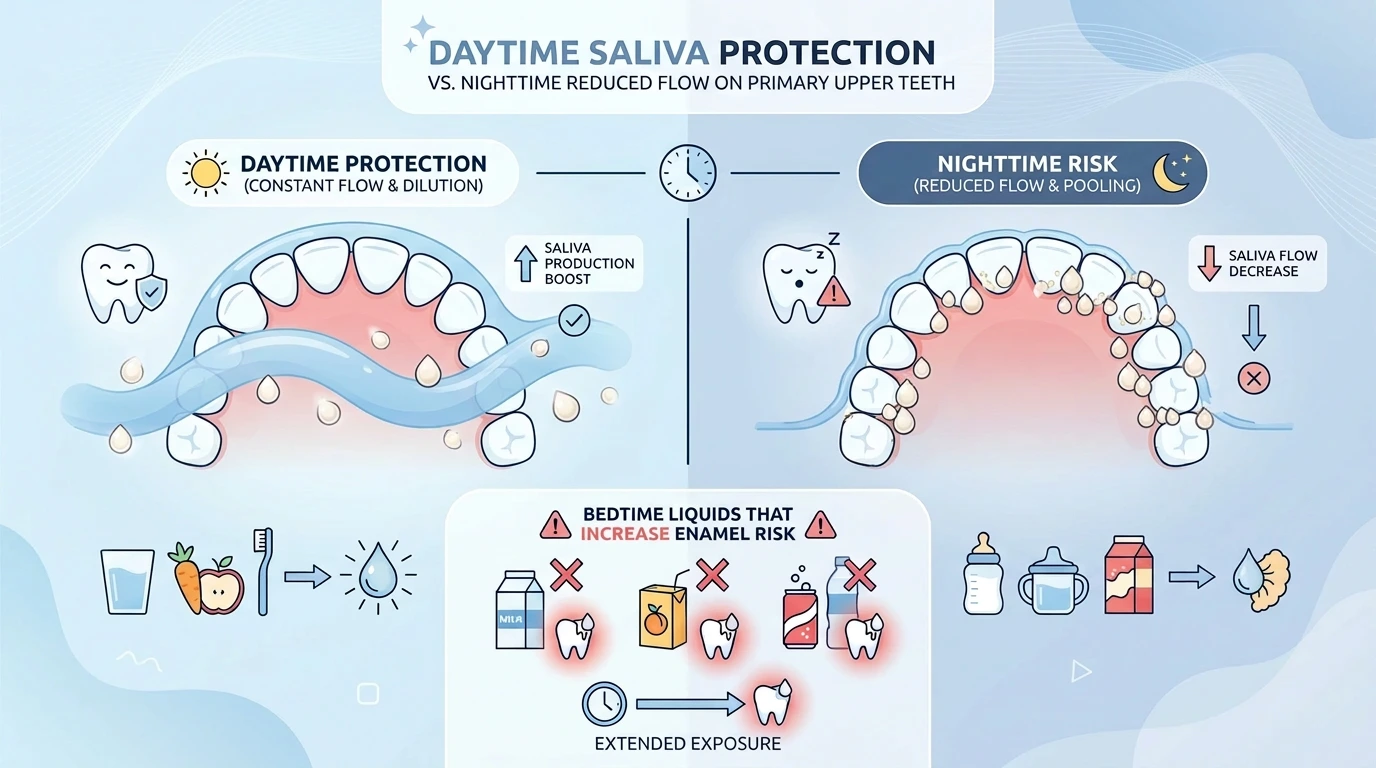
Baby bottle tooth decay is a severe pattern of dental caries in infants and toddlers caused by frequent, prolonged exposure of baby teeth to sugary liquids like milk, formula, or fruit juice, particularly during naps and nighttime sleep.
2. At what age should my child stop taking a bottle to bed?
Ask your child's dentist when to wean your child from bedtime bottles. Transitioning to water or offering an open cup during daytime hours helps protect emerging baby teeth from nighttime acid exposure.
3. Can breast milk cause tooth decay if a baby nurses to sleep?
While breast milk contains beneficial nutrients, it also contains lactose, a natural sugar. When a baby nurses to sleep and milk pools around primary teeth without subsequent cleaning, oral bacteria can use those sugars to produce enamel-eroding acids.
4. What does early tooth decay look like on baby teeth?
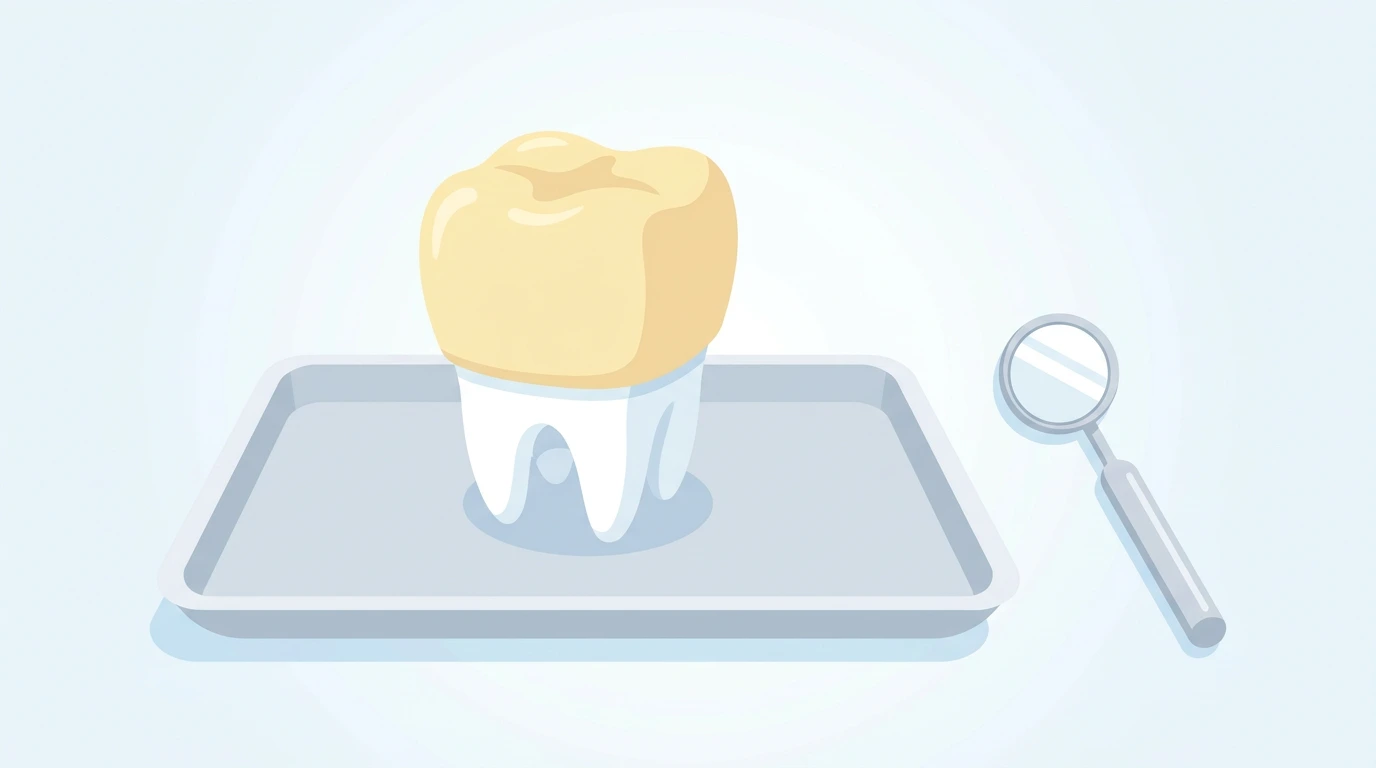
Early decay usually appears as dull, chalky white bands or spots running horizontally along the gumline of the upper front incisors. Over time, these areas may turn yellowish or brown and develop into visible pits or cavities.
5. Why are primary teeth important if they just fall out anyway?
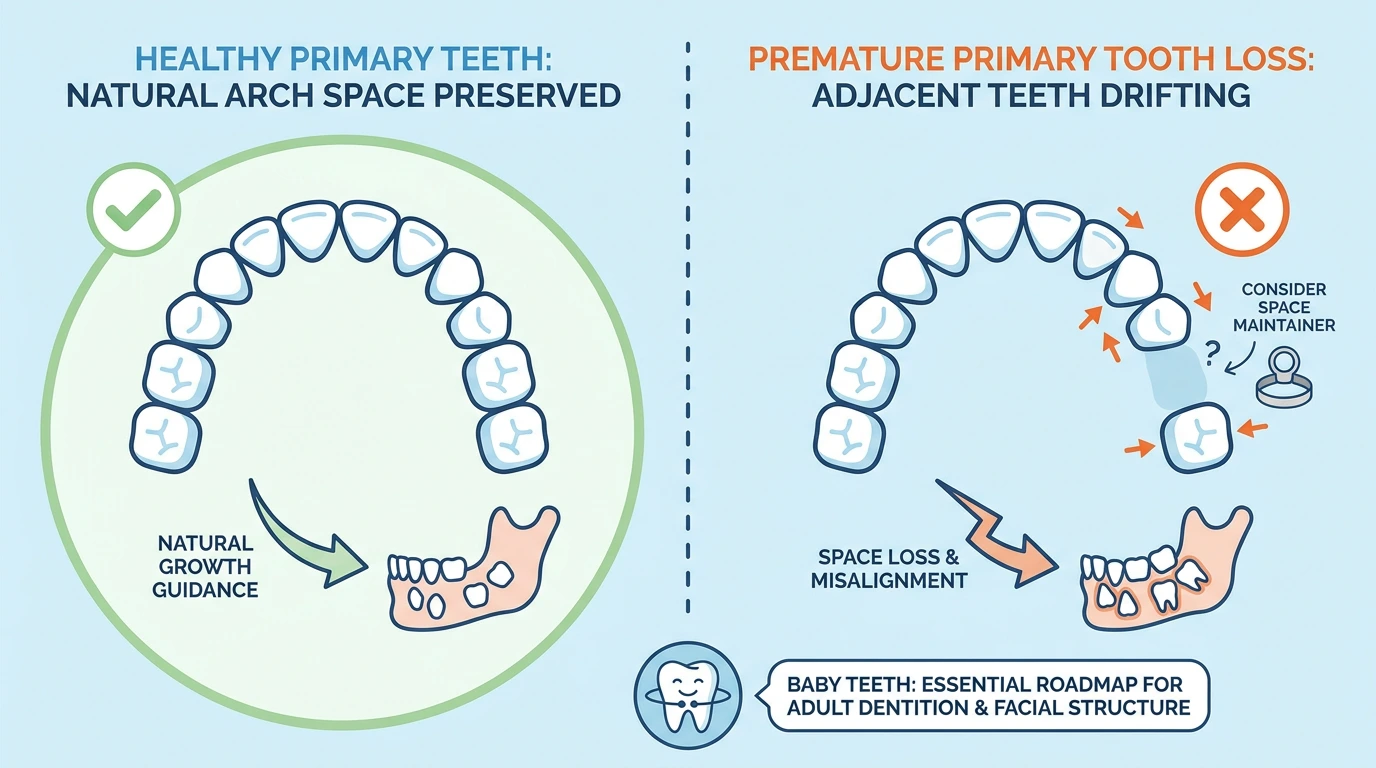
Primary teeth are vital for chewing nutritious food, learning clear speech, and guiding facial muscle development. They also act as natural space holders that guide permanent adult teeth into proper alignment as your child grows.
6. Is it safe to leave water in a toddler's bedtime bottle?
Yes, plain water is a safe choice for bedtime bottles or cups because it contains no sugars or carbohydrates for bacteria to consume. Offering pure water helps hydrate your child without increasing the risk of nighttime enamel damage.
7. How does a pediatric dentist treat early childhood caries?
Treatment depends on the severity of decay and may range from conservative remineralizing treatments to composite fillings or pediatric crowns. A pediatric dentist focuses on keeping the child comfortable while restoring tooth strength and function.
8. How should I clean my baby's teeth before bed?
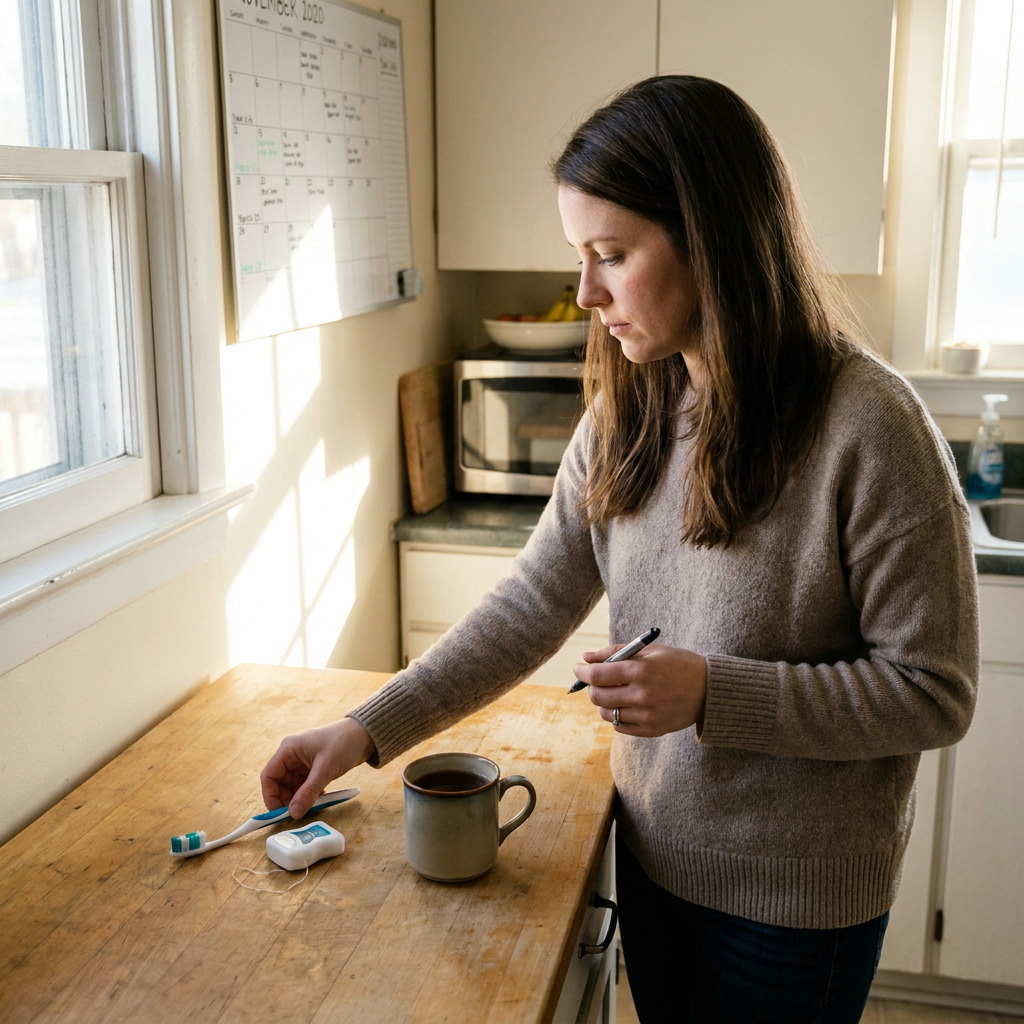
Clean your infant's mouth by wiping their gums with a clean, damp cloth after feedings. Once the first tooth erupts, use a small, soft-bristled toothbrush with a tiny smear of fluoride toothpaste twice daily, especially right before bedtime.
9. When should a child have their first dental visit?
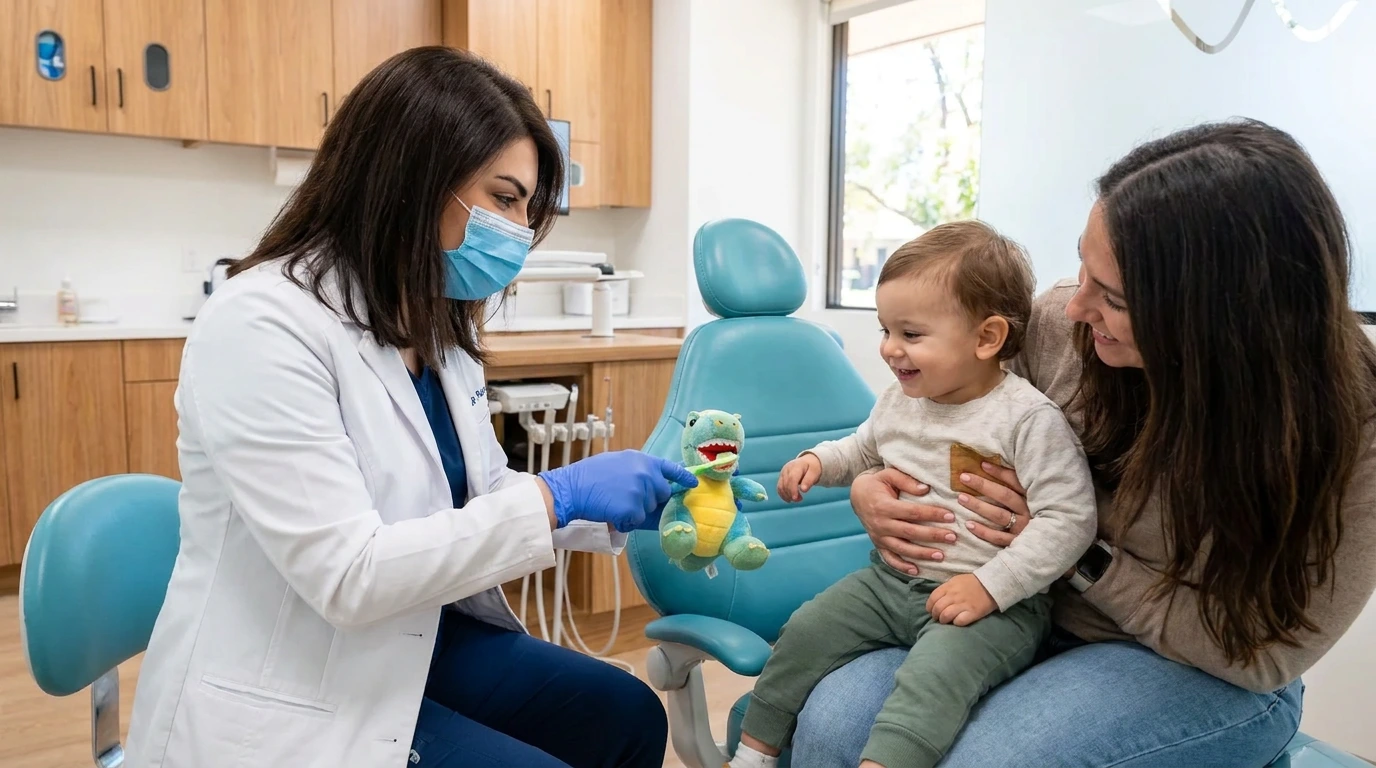
Children should see a dental professional when their first tooth appears, or no later than their first birthday. Early visits allow the clinician to assess oral development and provide tailored guidance on feeding, teething, and preventive hygiene.
10. What should I do if I notice dark spots on my child's teeth?
If you observe dark, yellow, or chalky spots on your child's teeth, contact our team to schedule an evaluation. Prompt assessment allows the dentist to address decay early and help protect your child from toothaches or premature tooth loss.